

Why Are Plants And Animals Moved Around (Turned Into Invasive Species)?
The ways and routes by which invasive species are imported or introduced into new environments are called pathways, or vectors. Globalization has increased long-distance travel and commerce. This and other factors take increased the frequency of introductions of nonnative plants, animals and pathogens to aquatic and terrestrial ecosystems around the globe. Natural pathways (i.due east., those not aided by humans), such every bit marine debris, tin can also bring harmful species to a new habitat. The 'harm' may in fact be outcompeting, and wiping out, native species in areas the newcomer colonizes.
Floatplane pilots: Check out this informative video to learn how to avoid spreading invasive plants and animals. Elodea and other aquatic invasive species can be spread to new lakes when they hitch a ride on your rudder or floats. Think to Make clean, Bleed and Dry out to remove any visible living plants or animals whenever you move betwixt waterbodies! Take the quiz and receive a certificate.
Human-aided Pathways
Significant homo sources of invasive species introduction for Alaska include: ane) contaminated cargo shipments arriving by air, country, or sea; 2) restoration, evolution or aircraft projects that can inadvertently carry seeds, spores or larvae from one place to another; and 3) intentional or unintentional releases or introductions of aquatic species. The latter covers cases where human being activeness brings discharged aquarium or anchor water, infected fishing gear, fouled hulls, or containers of live bait or seafood into contact with a new waterbody, unexpectedly carrying a "pest" species somewhere it has not existed before.
Sources relating to transportation and aircraft are particularly timely to consider. For example, a warming climate is expected to facilitate greatly increased shipping traffic forth the Alaska coast. This in turn has the potential to spread a major threat to wildlife, the Norway rat, farther north along the country'south declension. Species with low or seasonally concentrated populations (such as ground-nesting migratory birds) can exist decimated when rats arrive in previously rat-free areas, especially islands.
More than than 100 species of basis-nesting birds used for subsistence in Alaska may be vulnerable to rats, if rats colonize their areas. Rat infestations could exist peculiarly devastating for bird species that may already be facing diminished nesting habitats as a issue of climate modify. Read more than nearly the threat of rats and what Alaska communities and industries can exercise about them.
Climate Modify Considerations
Climate change could have equally significant furnishings where aquatic organisms are concerned: For example, higher almanac temperatures is likely to mean that species transported in floatplane floats or as hitchhikers in private aircraft detect receptive conditions in parts of Alaska where they have not been known to survive before.
Intercept Arrivals, Prevent Releases
Alaska's and the nation'southward interests volition be best served past asking citizens, visitors, and local inspectors alike to be vigilant and proactive about invasive species. This will go a long way to preventing accidental or ill-planned releases that damage the state's native fish and wild fauna resources. Help intercept arrivals and prevent releases.
Be especially observant about pathways or vectors that involve transportation (e.g., activities that involve shipping, docking or cargo transfer) or whatever type of "release" (whether intentional, inadvertent, or accidental). See the post-obit listing to better understand the types of actions through which invasive species can be moved from one identify to another and colonize new locales.
Transportation-related:
Contaminated Shipping (or ineffective docking/invasive species containment protocols)
- Cargo shipments by air, country or bounding main; Aircraft, including float planes
- Ship/boat landings, dockings, or groundings (a principal means of spreading rats to and inside Alaska)
- Ballast water/aircraft
- Restoration, highway and construction projects
- Live food trade and its packing cloth
Release-related: Intentional but ill-advised
- Intentional release of species outside their native range/illegal stocking
- Release of pet species that get invasive in a new environs
- Alive bait releases
- Aquarium trade/and illegal release of aquaria animals
Release-related: Accidental, or sick-planned
- Line-fishing gear and recreational equipment
- Aquatic farming
- Fouled hulls of commercial and recreational vessels
- Dry docks
- Restoration, highway and structure projects
- Science lab escapes or introductions
- Escaped ornamental plants, nursery sales, or disposals
- Escaped domestic animals
Vectors of Special Business to Alaska
The following section provides more than detail on some of the vectors that pose special risks for introduction of invasive species in Alaska.
Japanese Tsunami Marine Debris
Marine debris is an ongoing global problem. The after affects of the tsunami that hit Japan in March 2011, are now being seen on the western coast of North America. Wind and bounding main currents go along to scatter droppings, from the ghost ship institute sailing off the coast of Southeast, Alaska to the dock that arrived on an Oregon beach. Communities of potentially invasive nonnative species can survive the trip beyond the Pacific Ocean hitchhiking a ride on marine droppings. To read more most this pathway for introducing nonnative species to coastal areas and to find the protocol for responding to marine droppings with living organisms, please visit the Aquatic Nuisance Species Chore Force website.
If you take found marine debris either at ocean or on shore, please report it to the NOAA marine debris programme: DisasterDebris@noaa.gov and if the debris has living organisms please report to the Alaska Department of Fish and Game, Invasive Species HOTLINE: 1-877-INVASIV. You tin collect data about the droppings and the organisms on the debris past post-obit the instructions on the standard datasheet for collecting and preserving nonnative species from marine debris (PDF 116 kB).
- Learn more about the species of concern that could hitchhike to Alaska on Japanese Tsunami Marine Debris — Sea Grant's Tsunami Droppings Species Spotter (PDF 923 kB)
Transportation
Both private and commercial transportation are major factors in the movement nonnative species throughout the United States. Global markets mean motion of goods from anywhere on World in shorter fourth dimension periods. With shorter transit time in that location is greater likelihood that nonnative organisms will survive the journey. This category includes ship by planes, float planes, helicopters, and boats of all types; basis transportation, including cars, trucks, and heavy mechanism used in land clearing, logging, restoration work, etc.; motion via humans and pets (e.one thousand., on clothing, fishing gear, shoes, stuck to pet's fur or collar); and livestock and wild animals moving through infested fields.
In Alaska, a major business concern is transport and spread of invasive Norway rats to uninfested parts of the land. Rats are known to stow away virtually undetected on aircraft, cargo vehicles, and vessels, and to swim from infected vessels to nearby islands. Because they chew wiring and kill ground-nesting seabirds, their presence can take serious consequences for humans and wildlife alike. Learn more almost the Norway rat, including pertinent laws for vessel, aircraft and facility owners.
Ballast H2o
All sizes of watercraft, from big commercial ships to smaller recreational boats, use water in tanks for balance (i.east., ballast). When water is taken upward in one port and released at a different port, chances are, if the vessel moved any substantial distance, the organisms at the new port are dissimilar than where the ballast was brought onboard. These vessels conduct live aquatic organisms from fresh, brackish or marine water across and between oceans or along coastlines. Prior to the utilise of h2o for anchor, inexpensive and heavy materials such as rocks, sand, or soil were used. This "dry out anchor" introduced thousands of species of insects, other arthropods, mollusks and plants to new locations around the world.
The use of h2o for anchor introduces organisms from 4 types of communities: plankton (drifters); nekton (i.e., costless-pond species); benthos (bottom-habitation organisms such as worms and the resting stages of phytoplankton and zooplankton); and fouling communities (organisms that adhere to structures of the anchor compartments). Anchors, anchor chains and lockers tin as well be sites where larvae or adults of invasive aquatic species hitchhike their way to new waterways.
Alive Nutrient Manufacture
The import of alive, exotic foods into Alaska and the United states in general, can event in nonnative organisms being released into the wild. These organisms may be carriers of affliction and pathogens, and some of these species may be able to survive in Alaska's marine and fresh waters. The snakehead fish and the Chinese mitten crab are two species brought into the U.S. for commercial distribution as food. Snakeheads are voracious predators and Chinese mitten venereal are anadromous, pregnant they drift up into freshwater areas to spawn. They burrow in riverbanks causing erosion, potentially endangering Pacific salmon spawning habitat. Crayfish, believed to have been imported into Alaska for food, have in the past been found living in the Kenai River.
Live Seafood Packing and Disposal
Much seafood is packed in seaweed prior to distribution. Because this seafood is often transported long distances, organisms packed in seaweed may attain new waters every bit an unintended past-product of the live food trade. Don't dump seaweeds used as packing material, or their raft of hitchhiking organisms, into the waters where yous live or work; their fragments, larvae or cysts may persist and hatch, spreading a pest species into new areas.
Illegal Stocking
Although it is prohibited past law in Alaska, people sometimes release fish into new waters for various reasons, including wanting to create a personal fishery. This beliefs often causes substantial impacts. Equally an example, northern state highway introduced in southcentral Alaska (and outside their native range) take decimated sport fishing opportunities on the Kenai Peninsula, in the Susitna Drainage and in lakes effectually Anchorage.
Fishing Bait Releases
While electric current sport fishing regulations prohibit the use of live fish as bait when fishing in fresh water, it is brash that the use of whatever live bait in fresh water can introduce species that disrupt ecosystems and eliminate native species, every bit well as introduce disease and pathogens. Examples include crayfish and earthworms.
Aquaria Releases
Accidental escape and intentional release of unwanted aquatic pets and aquaria plants are too a source of invasive species. This pathway includes animals imported for educational purposes and and then released when they are no longer wanted. Carp (goldfish) are notoriously invasive in many parts of the country and can survive in water temperatures as low as 4° C. Pet goldfish are known to take been released into a pond on the Kenai Peninsula; in guild to ensure that all fish were successfully eradicated, the artificial swimming containing them was drained. In another Alaska example, an infestation of Elodea nuttallii, a common freshwater aquarium plant, resulted when someone dumped the contents of their aquarium into a slough near Fairbanks. Scientists are trying to determine the total range of furnishings to the waterway and what treatment, if any, is possible.
Disposal of Solid Waste or Wastewater
Seeds, viable roots and other propagules of invasive plants may likewise be easily spread to receiving water through wastewater discharge, and then spread by water flow to afar areas downstream. Wastewater tin harbor a number of encysted pathogens that are harmful to human being health.
Aquatic Farming
Atlantic salmon, mollusks, invertebrates and pathogens associated with aquatic farming generate concern because of their potential to affect aquatic environments if they naturalize to the environment in which they are produced.
Pathogens carried by resistant nonnative animals to vulnerable populations of native species accept resulted in assaults on healthy populations. For example, whirling affliction has decimated rainbow trout in many western U.Due south. rivers. Information technology was originally introduced when European brown trout, which are tolerant of whirling illness, were imported to waters and hatcheries of the American West. Although whirling disease has not been detected in Alaska, fragments of its Deoxyribonucleic acid have been found in hatchery trout in Alaska. This leads experts to believe that the illness could make it at whatsoever fourth dimension.
Hull Fouling
Hull fouling may be the most underestimated pathway for nonnative introductions of aquatic invasive species. The growth and aggregating of unwanted organisms on surfaces such as the hulls and other submerged parts of vessels (including oil rigs and barges), docks, piers and man-made structures in harbors and marinas, equipment associated with fishing, mariculture, diving, even marine debris can transfer and introduce fouling organisms to new freshwater and marine environments.
Roughly 90% of the 343 marine alien species in Hawaii are thought to have arrived through hull fouling. Meanwhile, experts believe that approximately 36% of the nonnative coastal marine species establishing in continental North America could be attributed to hull fouling alone, while ballast water is thought to account for a smaller portion. As more people and appurtenances move from the face-to-face U.Due south. to Alaska, the chances of invasive species traveling with them also increases.
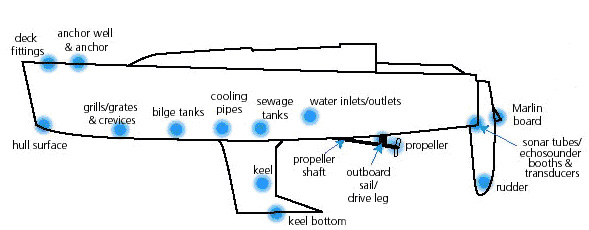
Areas on vessels probable to accumulate fouling communities of nonnative organisms.
Recreational Equipment
Fouled boat hulls, fishing gear (including felt-soled waders), dive equipment and other equipment transported betwixt waterways tin acquit invasive species. Zebra mussels and milfoil are 2 examples of invasive species that are believed to have been introduced to many freshwater systems in the nation every bit hitchhikers on boats or boat trailers. Felt-soled waders accept been implicated every bit the vector for translocating New Zealand mudsnails, Didymosphenia geminata (a slimy freshwater diatom), and other organisms by anglers unaware of their role in moving harmful nonnative species.
Scientific discipline/Lab Escapees, Disposal or Release
Accidental or intentional release of lab animals has introduced some nonnative species into Usa waters and lands. Here in Alaska, the reddish-legged frog was introduced to Chichagof Island by a teacher who idea the act was empathetic. These frogs could prey on native Western toad populations on the island. Ironically, it's possible that this species could exist spread to other islands in Southeast Alaska by children, who often like to make temporary pets of creatures they observe in the wild, and then release them when they lose interest.
Escaped Ornamental Plants, Nurseries Sales, or Disposals
Many invasive plant issues began every bit desirable ornamental plants for auction in nurseries and garden shops. Royal loosestrife, for example, is sold as an ornamental establish but it takes over native vegetation in wetlands, and can clog streams.
Source: https://www.adfg.alaska.gov/index.cfm?adfg=invasive.pathways
Posted by: smithafteld43.blogspot.com
0 Response to "Why Are Plants And Animals Moved Around (Turned Into Invasive Species)?"
Post a Comment