

What Animals Live At Mount Saint Helens National Volcanic Monument
After 34 years on the volcano, ecologist Charlie Crisafullireflects on rebirth at Mount St. Helens.
What's your start memory of the mountain?
It was two months after the eruption. I flew in by helicopter. The forest was flattened, the streams choked with volcanic ash and pumice—seemingly lifeless every bit far as the centre could run across. I saw the steaming, gaping crater and realized something incredibly profound had happened here. It was beyond all senses to comprehend the scale and the extent of change. It was heady…and too chilling. I was only 22, but I knew correct away this was a mecca. Nosotros have been going back to the same plots for 33 years now—watching how species come, become, and their populations modify, often in very dramatic ways.
What exactly is happening on the mountain?
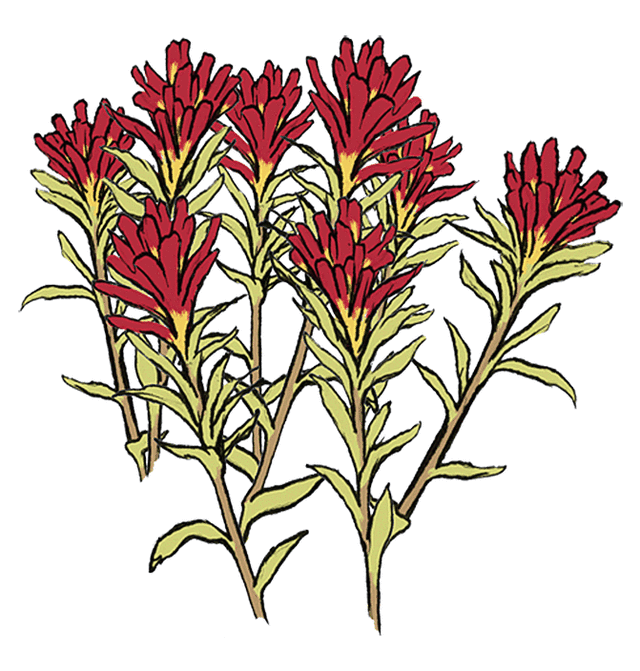
Substantially, it'due south a big island: a very big, slowly regenerating system. The landscape is important because it provides habitat for a big array of species that thrive in early, pre-forest weather. Once trees are present and the canopy closes, that's a game changer. So nosotros're seeing species (groups of birds, butterflies, plants, and mammals, for example) that are distinctly dissimilar from the surrounding areas of the Cascades. It's a biological hot spot. Y'all tin can see an countless circuitous with meadows of colorful flowers, of paintbrush and lupin, dumbo thickets of shrubs, immature patches of deciduous forest, and scattered conifers. This mosaic of habitats provides resources for an equally dazzling array of animals.
Why is this place then special to you lot?
It has to exercise with hope. All of the states go through tragedy at some indicate. What is more than hopeful than looking at a shattered landscape and seeing a sprig of green come up upwardly through the cold, dark ashes? Life marches on. That's the poesy of the place.
A Field Guide to the Wild Things of St. Helens
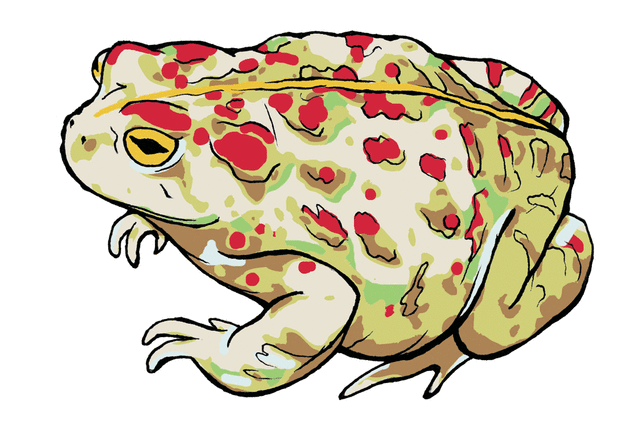
WESTERN TOAD
This hefty amphibian is considered threatened or endangered in most western states, but in the wake of the eruption its numbers effectually St. Helens exploded—aided past a lack of predators, pathogens, and parasites. In mid-to-late summertime yous'll find enormous masses of jet-black tadpoles forth the marshy shorelines of lakes and ponds. They are generally mute, except during their enormous almanac orgy. "It'southward an amazing biological spectacle," says Crisafulli, "as 1,000 orange-sized floating Buddhas vye for long-awaited sex activity."
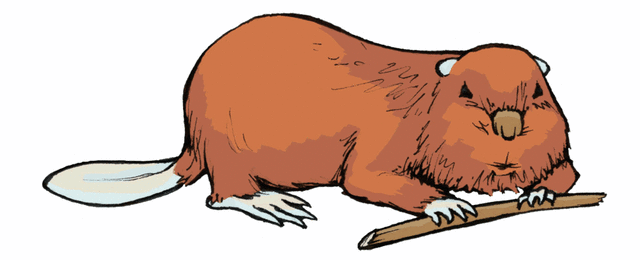
AMERICAN BEAVER
This flat-tailed, ruby dark-brown–coated megarodent is one of the area's fundamental bioengineers. Every bit beavers travel upriver, felling cottonwoods, edifice dams and lodges in the blowdown zone, they also alter the habitat for other species—in item, converting streams to ponds perfect for amphibian baby-making.
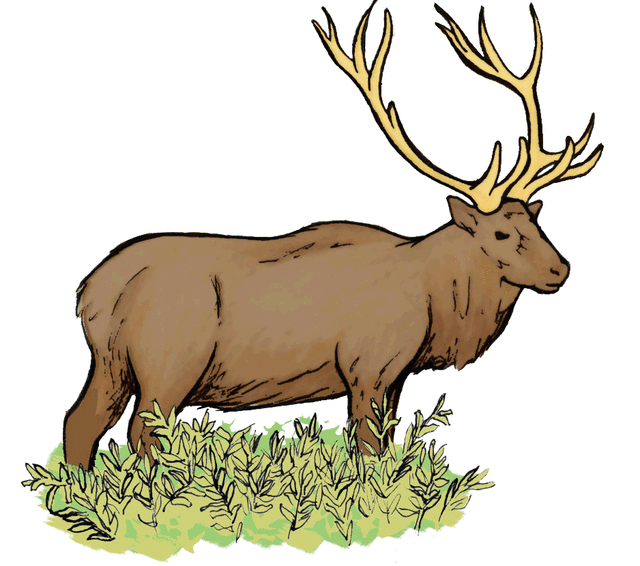
ELK
In the fall, equally many as 300 of these purple mammals roam the pumice plain, just north and w of the crater, munching on fields of willow and paintbrush. Crisafulli says they're impacting the landscape, too: "When 75 elk stop in ane place for a one-half hour—rubbing their antlers on bushes, trampling, and uprooting plants—they change that patch of basis for 10 years." On the plus side, elk poo and urine are "nutrient bombs" that enrich volcanic soil and nourish the next cycle of grasses and flowers.
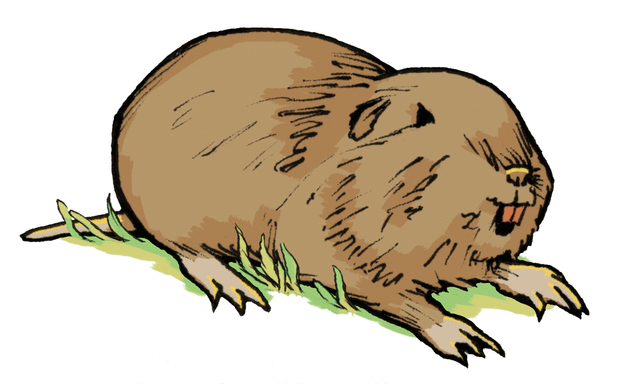
NORTHERN POCKET GOPHER
You'll catch glimpses of this stout burrower's prodigious clay mounds along trails that traverse the open up smash, including the Boundary Trail (see p. 64). Considering gophers dwell in clandestine bomb shelters, they escaped the worst of the blast and helped spur the get-go institute growth on the mountain, mixing expressionless volcanic ash with healthy soil as they burrowed in search of nutrient. Today, "they're spreading like crazy across the landscape, constantly eating plants and turning the soil," says Crisafulli.
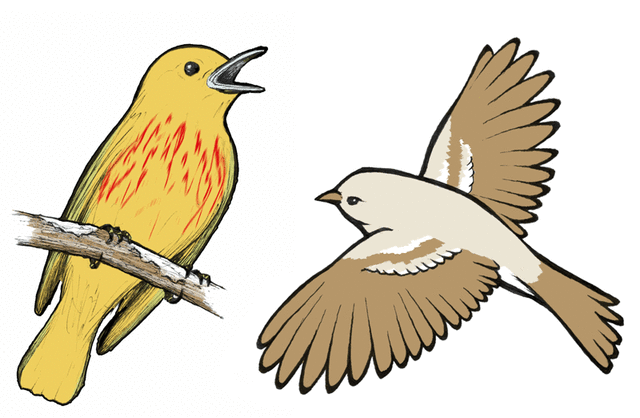
YELLOW WARBLER & WILLOW FLYCATCHER
Cheers to a patchwork of woods-free habitats, St. Helens is home to a startlingly diverse array of birds. Be on the lookout for tiny yellow warblers whistling away in willow and alder shrubs, and brown-feathered willow flycatchers zooming after insects along nearly trails in the blowdown, pyroclastic menstruation, mudflow, and debris avalanche zones.
THE SASQUATCH Cistron
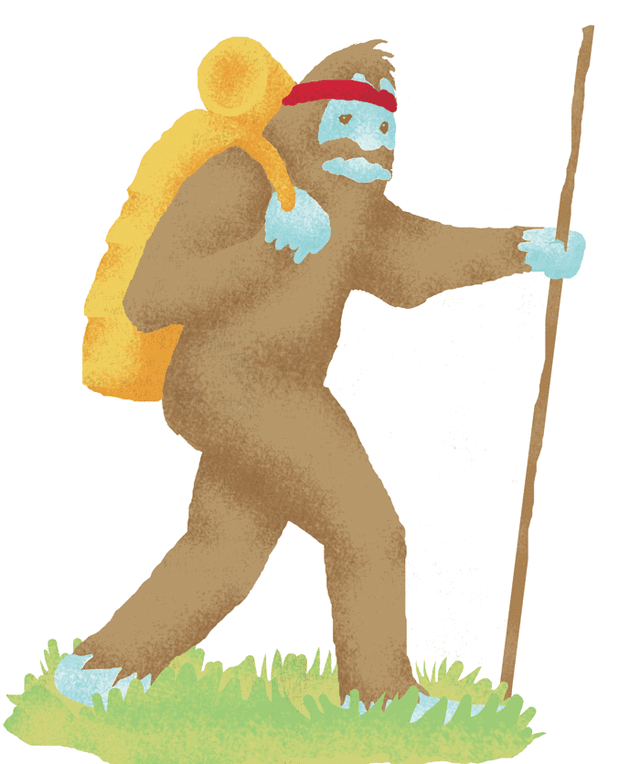
Rumored to stand about 10 feet tall and weigh shut to a ton, this hirsute hominid start surfaced in oral civilisation more than 200 years ago, in the Clallam Indians' accounts of a ferocious killer who would lurk in St. Helens's caves and lava pits.
The story gained a new chapter in July 1924, when a grouping of miners claimed they were attacked by a grouping of "hairy apes" who threw boulders at their motel during the dark. (They never establish the beasts.)
To this day, inexplicable footprints, pilus samples, and even the occasional blurry photograph nonetheless turn up.
Source: https://www.pdxmonthly.com/travel-and-outdoors/2014/06/life-goes-on-mount-st-helens-flora-and-fauna-jun-2014
Posted by: smithafteld43.blogspot.com
0 Response to "What Animals Live At Mount Saint Helens National Volcanic Monument"
Post a Comment