

How Do Creationists Explain The Species Of Animals We Have Today
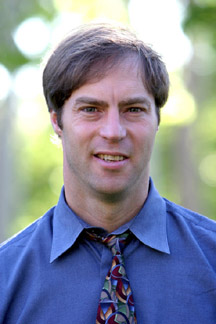
| Stephen C. Meyer | |
|---|---|
 | |
| Born | 1958 (age 63–64) |
| Alma mater | University of Cambridge |
| Occupation | Manager of the Center for Scientific discipline and Culture at the Discovery Institute and Vice President and Senior Young man at the DI |
| Known for | Advocate of intelligent design |
| Website | www |
Stephen C. Meyer (; born 1958) is an American author and erstwhile educator. He is an advocate of the pseudoscience of intelligent blueprint and helped found the Centre for Scientific discipline and Culture (CSC) of the Discovery Institute (DI),[ane] which is the main organization behind the intelligent design movement.[2] [3] [iv] Before joining the DI, Meyer was a professor at Whitworth College. Meyer is a Senior Fellow of the DI and Director of the CSC.[5]
Biography
In 1981, Meyer graduated from Whitworth College earlier beingness employed at Atlantic Richfield Visitor (ARCO) in Dallas from November 1981 to December 1985.[6] [7] Meyer and so took upwards a scholarship from the Rotary Order of Dallas, where he obtained a PhD in the History and Philosophy of Science at Cambridge University in 1991.[eight] [nine]
In Autumn 1990 he became an banana professor of philosophy at Whitworth, where he was promoted to Associate Professor in 1995,[10] and gained tenure in 1996. In Fall 2002 he moved to the position of professor, Conceptual Foundations of Scientific discipline, at the Christian Palm Beach Atlantic University. He continued there to Jump 2005,[11] [vii] and so ceased teaching to devote his fourth dimension to the intelligent pattern motion.[12]
Work
Creation science
As an undergraduate, Meyer had been "quite comfy accepting the standard evolutionary story, although I put a fleck of a theistic spin on information technology – that (evolution) is how God operated", simply during his piece of work with ARCO in Dallas, he was influenced by a briefing: "I remember being especially fascinated with the origins debate at this conference. It impressed me to see that scientists who had e'er accepted the standard evolutionary story were at present defending a theistic conventionalities, non on the footing that it makes them experience good or provides some form of subjective contentment, but because the scientific evidence suggests an activity of heed that is beyond nature. I was actually taken with this."[10] [thirteen] Charles Thaxton organised the briefing held in Dallas on nine–10 February 1985, featuring Antony Flew, and Dean H. Kenyon who spoke on "Going Beyond the Naturalistic Mindset: Origin of Life Studies".[14] [xv]
Meyer became function of Thaxton'southward circle,[sixteen] and joined the contend with two articles published in March 1986: in 1, he discussed The Mystery of Life'due south Origin which Thaxton had recently co-authored, commenting that the book had "washed well to intimate that 'nosotros are not solitary.' Simply revelation tin can now identify the Who that is with united states."[17] The other article discussed the 1981 McLean 5. Arkansas and 1985 Aguillard v. Treen district courtroom instance rulings that teaching creation science in public schools was unconstitutional every bit creationism originated in religious conviction, and its reliance on "tenets of religion" implied it was not scientific. Meyer argued that mod scientific method equally relied on "foundational assumptions" based on organized religion in naturalism, which "assumed all events to be exclusively the result of physical or natural causes", and then on the definition used in the court cases "science itself does not qualify equally legitimate science". He proposed that "scientists and philosophers" could turn to Biblical presupposition to explain "the ultimate source of human reason, the being of a existent and uniformly ordered universe, and the power present in a creative and ordered man intellect to know that universe. Both the Old and New Testaments define these relationships such that the presuppositional base necessary to modern scientific discipline is not only explicable just also meaningful."[18] Meyer's argument on epistemological presuppositions and accusation that evolution is based on an assumption of naturalism became primal to the design movement.[19]
At the university of Cambridge in England, he met theology pupil Mark Labberton. In the Fall of 1987 Labberton introduced Meyer to Phillip E. Johnson who was on a sabbatical at Academy Higher London, and having become "obsessed with evolution" had begun writing a book on what he saw as its problems. Meyer says "We walked around Cambridge boot the pea gravel and talking over all the problems."[20] [21] [22]
An article co-authored by Meyer and Thaxton published on 27 December 1987 asserted that "human rights depend upon the Creator who made man with dignity, not upon the country." They contrasted this with "purely material, scientific" ideas which equated humans to animals, and restated their central thesis that "Only if man is (in fact) a production of special Divine purposes tin can his merits to distinctive or intrinsic dignity be sustained." The terminology and concepts after featured in the Wedge strategy and theistic realism.[23] [24]
Intelligent Design
After the 1987 Edwards v. Aguillard Supreme Court ruling affirmed the Aguillard v. Treen conclusion against education cosmos science, Thaxton every bit academic editor of Of Pandas and People adopted intelligent design wording.[25] [26] Meyer recalls the term coming upwards at a June 1988 conference in Tacoma organised past Thaxton, who "referred to a theory that the presence of Deoxyribonucleic acid in a living cell is evidence of a designing intelligence."[27] Phillip E. Johnson was drafting a volume arguing confronting naturalism as the footing for evolutionary science, and Meyer brought a copy of the manuscript to the conference.[28] He met Paul A. Nelson who institute it exciting to read,[29] and the two collaborated on a joint project. Needing a mathematician, they contacted Dembski in 1991. Thaxton has described Meyer as "kind of similar" a Johnny Appleseed, bringing others into the motility.[xxx]
Meyer became 1 of a group of prominent immature intelligent blueprint (ID) advocates with bookish degrees: Mayer, Nelson, Dembski and Jonathan Wells.[31] Meyer participated in the "Ad Hoc Origins Committee" defending Johnson's Darwin on Trial in 1992 or 1993 (in response to Stephen Jay Gould'south review of it in the July 1992 consequence of Scientific American), while with the Philosophy department at Whitworth College.[32] He was afterwards a participant in the first formal meeting devoted to ID, hosted at Southern Methodist University in 1992.[32]
In December 1993, Bruce Chapman, president and founder of the Discovery Institute, noticed an essay in the Wall Street Journal by Meyer about a dispute when biology lecturer Dean H. Kenyon taught intelligent design in introductory classes.[1] [33] [34] Kenyon had co-authored Of Pandas and People, and in 1993 Meyer had contributed to the teacher'southward notes for the 2nd edition of Pandas. Meyer was an erstwhile friend of Discovery Establish co-founder George Gilder, and over dinner almost a year afterward they formed the idea of a recall tank opposed to materialism. In the summer of 1995 Chapman and Meyer met a representative of Howard Ahmanson, Jr. Meyer, who had previously tutored Ahmanson'south son in science, recalls existence asked "What could you do if y'all had some financial backing?"[one] He was a co-writer of the "Wedge strategy", which put along the Discovery Institute's manifesto for the intelligent design movement.[35] [36]
In 1999, Meyer with David DeWolf and Mark DeForrest laid out a legal strategy for introducing intelligent design into public schools in their book Intelligent Design in Public School Science Curriculum.[37] Meyer has co-edited Darwinism, Design, and Public Education (Michigan Country University Press, 2000) with John Angus Campbell and co-edited Science and Evidence of Blueprint in the Universe (Ignatius Press, 2000) with Michael J. Behe and William A. Dembski. In 2009, his book Signature in the Cell was released and in December of that year.
Meyer has been described equally "the person who brought ID (intelligent design) to DI (Discovery Institute)" by historian Edward Larson, who was a fellow at the Discovery Institute prior to it becoming the center of the intelligent design movement.[38] In 2004, the DI helped innovate ID to the Dover Area Schoolhouse District, which resulted in the Kitzmiller v. Dover Area School District case where ID was ruled to be based on religious behavior rather than scientific evidence. Discussing ID in relation to Dover, on May vi, 2005 Meyer debated Eugenie Scott, on The Big Story with John Gibson. During the argue, Meyer argued that intelligent design is critical of more than just evolutionary mechanisms like natural selection that lead to diversification, but of mutual descent itself.[39]
Films and debates
He has appeared on television and in public forums advocating intelligent blueprint. Notably he wrote and appeared in the Discovery Institute'southward 2002 pic Unlocking the Mystery of Life [40] and was interviewed in the 2008 Expelled: No Intelligence Allowed pic. He has also been an active debater such every bit in Apr 2006 with Peter Ward, a paleontologist from the University of Washington held an open up online discussion on the topic of intelligent blueprint in the Talk of the Times forum in Seattle, WA.[41] Meyer has also debated atheists Peter Atkins, Eugenie Scott and Michael Shermer.
Teach the Controversy
In March, 2002, Meyer appear a "teach the controversy" strategy, which alleges that the theory of evolution is controversial within scientific circles, following a presentation to the Ohio Country Board of Education.[42] The presentation included submission of an annotated bibliography of 44 peer-reviewed scientific articles that were said to raise significant challenges to cardinal tenets of "Darwinian evolution".[43] In response to this claim the National Center for Science Education, an organisation that works in collaboration with National Academy of Sciences, the National Association of Biology Teachers, and the National Science Teachers Association that back up the teaching of evolution in public schools,[44] contacted the authors of the papers listed and 26 scientists, representing 34 of the papers, responded. None of the authors considered that their enquiry provided prove against evolution.[45] On March xi, 2002 during a panel word on evolution Meyer publicly told the Ohio Board of Education that the "Santorum Amendment" was part of the Education Bill, and therefore that the Country of Ohio was required to teach alternative theories to evolution as office of its biology curriculum. Professor of Biological science, Kenneth R. Miller replied that Conference Reports practise not conduct the weight of constabulary and that in implying that they do, Meyer factually misstated the nature and gravitas of the Santorum Amendment.[46]
Proceedings of the Biological Society of Washington article
On 4 August 2004, an article by Meyer appeared in the peer-reviewed scientific periodical, Proceedings of the Biological Society of Washington.[47] On September 7, the publisher of the journal, the Council of the Biological Society of Washington, released a statement retracting the article every bit non having met its scientific standards, and saying that it had been published at the discretion of the former editor, Richard Sternberg, "without review past any associate editor".[48] Critics believe that Sternberg's personal and ideological connections to Meyer suggest at to the lowest degree the advent of conflict of involvement in allowing Meyer's newspaper to be published.[49]
The periodical's reasons for disavowing the article were rebutted past Sternberg, who says the paper underwent the standard peer-review procedure and that he was encouraged to publish information technology by a member of the Council of the BSW.[50]
A critical review of the commodity is available on the Panda's Pollex website.[51] In January 2005, the Discovery Institute posted its response to the critique on their website.[52]
Claims of persecution
Meyer contends that those who oppose Darwinism are persecuted by the scientific community and prevented from publishing their views. In 2001, he signed the statement A Scientific Dissent from Darwinism, congruent with the launch of the PBS Television series Evolution, saying in part:
The numbers of scientists who question Darwinism is a minority, but it is growing fast. This is happening in the face of violent attempts to intimidate and suppress legitimate dissent. Immature scientists are threatened with deprivation of tenure. Others accept seen a consequent blueprint of answering scientific arguments with ad hominem attacks. In particular, the series' try to stigmatize all critics – including scientists – every bit religious "creationists" is an excellent case of viewpoint discrimination.[53]
A wide range of scholarly, science teaching and legislative sources take denied, refuted, or off-handedly dismissed these allegations. In a 2006 article published in the Journal of Clinical Investigation, a group of writers that included historian of science Ronald L. Numbers (author of The Creationists), philosopher of biological science Elliott Sober, Wisconsin State Associates adult female Terese Berceau and four members of the section of biochemistry at the University of Wisconsin–Madison characterized such claims as being a "hoax".[54] In their website refuting the claims in the film Expelled (which featured Meyer), the National Eye for Science Didactics states that, "Intelligent pattern advocates ... accept no research and no prove, and have repeatedly shown themselves unwilling to formulate testable hypotheses; nevertheless they complain about an imagined exclusion, even after having flunked the nuts."[55] In analysing an Academic Liberty neb that was based upon a Discovery Institute model statute, the Florida Senate found that: "According to the Department of Education, there has never been a case in Florida where a public school teacher or public school student has claimed that they accept been discriminated against based on their scientific discipline teaching or science grade work."[56]
Signature in the Cell
On June 23, 2009, HarperOne released Meyer's Signature in the Prison cell: DNA and the Evidence for Intelligent Blueprint. The philosopher Thomas Nagel, who generally argues in opposition to the philosophical position of physicalist reductionism specifically and materialism more mostly, submitted the book every bit his contribution to the "2009 Books of the Year" supplement for The Times, writing "Signature in the Prison cell...is a detailed account of the problem of how life came into existence from lifeless matter – something that had to happen before the process of biological evolution could begin ... Meyer is a Christian, but atheists, and theists who believe God never intervenes in the natural world, will be instructed by his careful presentation of this fiendishly hard trouble."[57]
Stephen Fletcher, chemist at Loughborough University, responded in The Times Literary Supplement that Nagel was "promot[ing] the book to the rest of us using statements that are factually incorrect."[58] Fletcher explained "Natural selection is in fact a chemical process as well every bit a biological procedure, and it was operating for about half a billion years earlier the earliest cellular life forms appear in the fossil record."[58] In another publication, Fletcher wrote: "I am afraid that reality has overtaken Meyer'south volume and its flawed reasoning", pointing out scientific problems with Meyer's piece of work past citing how RNA "survived and evolved into our own human protein-making manufacturing plant, and continues to make our fingers and toes."[59]
Darrel Falk, former president of the BioLogos Foundation and a biology professor at Signal Loma Nazarene University, reviewed the book, saying it illustrates why he does non support the intelligent blueprint movement.[60] Falk is critical of Meyer'south announcement of scientists beingness wrong, such as Michael Lynch about genetic drift, without Meyer having washed any experiment or calculation to disprove Lynch's assertion. Falk writes, "the book is supposed to exist a science book and the ID movement is purported to be primarily a scientific movement – not primarily a philosophical, religious, or even popular movement", merely concludes "If the object of the book is to show that the Intelligent Blueprint movement is a scientific motility, it has not succeeded. In fact, what it has succeeded in showing is that it is a popular movement grounded primarily in the hopes and dreams of those in philosophy, in religion, and particularly those in the general public."[threescore]
Darwin's Doubt
On 18 June 2013, HarperOne released Darwin's Incertitude: The Explosive Origin of Animate being Life and the Instance for Intelligent Design.[61] In this book, Meyer proposed that the Cambrian explosion contradicts Darwin's evolutionary process and is all-time explained by intelligent design.
In a review published by The Skeptics Society titled "Stephen Meyer's Fumbling Bumbling Apprentice Cambrian Follies",[62] paleontologist Donald Prothero gave a highly negative review of Meyer's book. Prothero pointed out that the "Cambrian Explosion" concept itself has been deemed an outdated concept after recent decades of fossil discovery and he points out that 'Cambrian diversification' is a more consensual term at present used in paleontology to describe the lxxx million-yr fourth dimension frame where the fossil tape shows the gradual and stepwise evolution of more than and more complicated animal life. Prothero criticizes Meyer for ignoring much of the fossil record and instead focusing on a later on stage to give the impression that all Cambrian life forms appeared abruptly without predecessors. In contrast, Prothero cites paleontologist B.S. Lieberman that the rates of evolution during the 'Cambrian explosion' were typical of any adaptive radiation in life's history. He quotes another prominent paleontologist Andrew Knoll that '20 million years is a long time for organisms that produce a new generation every year or two' without the demand to invoke any unknown processes. Going through a list of topics in modernistic evolutionary biology Meyer used to bolster his idea in the volume, Prothero asserts that Meyer, non a paleontologist nor a molecular biologist, does not understand these scientific disciplines, therefore he misinterprets, distorts and confuses the data, all for the purpose of promoting the 'God of the gaps' argument: 'anything that is currently not easily explained by scientific discipline is automatically attributed to supernatural causes', i.e. intelligent design.
In his commodity "Doubting 'Darwin's Dubiousness'" published in The New Yorker,[63] Gareth Cook says that this book is some other attempt by the creationist to rekindle the intelligent blueprint movement. Decades of fossil discovery around the globe, aided by new computational analytical techniques enable scientists to construct a more complete portrait of the tree of life which was not bachelor to Darwin (hence his "doubtfulness" in Meyer's words). The contemporary scientific consensus is that at that place was no "explosion". Cook cites Nick Matzke's analysis that the major gaps identified by Meyer are derived from his lack of understanding of the field's key statistical techniques (amidst other things) and his misleading rearrangement of the tree of life.[64] Cook references scientific literature[65] to abnegate Meyer's argument that the genetic machinery of life is incapable of large leaps therefore whatsoever major biological advancement must be the result of intervention by the 'intelligent designer'. Like Prothero, Cook as well criticizes Meyer's proposal that if something cannot be fully explained by today's science, it must be the work of a supreme deity. Calling it a 'masterwork of pseudoscience', Cook warns that the influence of this volume should not be underestimated. Melt opines that the book, with Meyer sewing skillfully together the trappings of science, wielding his credential of a Ph.D. (in history of science) from the Academy of Cambridge, writing in a seemingly serious and reasonable manner, will appeal to a big audience who is hungry for textile evidence of God or considers scientific discipline a conspiracy against spirituality.
From a different perspective, paleontologist Charles Marshall wrote in his review "When Prior Belief Trumps Scholarship" published in Science that while trying to build the scientific case for intelligent pattern, Meyer allows his deep conventionalities to steer his understanding and estimation of the scientific data and fossil records collected for the Cambrian menstruation. The result (this volume) is selective knowledge (scholarship) that is plagued with misrepresentation, omission, and dismissal of the scientific consensus; exacerbated by Meyer'southward lack of scientific knowledge and superficial understanding in the relevant fields, especially molecular phylogenetics and morphogenesis. The principal statement of Meyer is the mathematically incommunicable time scale that is needed to support emergence of new genes which drive the explosion of new species during the Cambrian period. Marshall points out that the relatively fast advent of new animal species in this flow is not driven by new genes, but rather by evolving from existing genes through "rewiring" of the cistron regulatory networks (GRNs). This basis of morphogenesis is dismissed by Meyer due to his fixation on novel genes and new poly peptide folds equally prerequisite of emergence of new species. The root of his bias is his "God of the gaps" arroyo to noesis and the sentimental quest to "provide solace to those who feel their religion undermined by secular society and past science in particular".[66]
Bibliography
- DeForrest, ME; DeWolf, DK; Meyer Due south, C (1999). Intelligent Design in Public Schoolhouse Science Curriculum: A Legal Guidebook. Richardson, Tex: Foundation for Idea and Ethics. ISBN978-0-9642104-1-7.
- Meyer, SC; Behe, MJ.; Lamantia, P; Dembski, WA (2000). Science and evidence for design in the universe: papers presented at a conference sponsored past the Wethersfield Plant, New York City, September 25, 1999. San Francisco: Ignatius Press. ISBN978-0-89870-809-7.
- Meyer, SC; Campbell, JC (2003). Darwinism, design, and public education. Eastward Lansing: Michigan State University Press. ISBN978-0-87013-675-7.
- Meyer, SC (2009). Signature in the cell: Dna and the evidence for intelligent design. HarperOne. ISBN978-0-06-147278-vii.
- Meyer, SC (2013). Darwin'due south Doubt: The Explosive Origin of Animal Life and the Case for Intelligent Design. HarperOne. ISBN978-0062071477.
- Meyer, SC (2021). Return of the God Hypothesis: Three Scientific Discoveries That Reveal the Mind Behind the Universe. HarperOne. ISBN978-0062071507.
Footnotes
- ^ a b c "Politicized Scholars Put Evolution on the Defensive", Jodi Wilgoren. The New York Times, August 21, 2005.
- ^ Forrest, Barbara (May 2007). "Understanding the Intelligent Pattern Creationist Movement: Its Truthful Nature and Goals. A Position Paper from the Centre for Inquiry, Role of Public Policy" (PDF). Washington, D.C.: Center for Inquiry, Inc. Retrieved 2007-08-06 . .
- ^ "Small Group Wields Major Influence in Intelligent Design Argue". ABC News. 2005-11-09. Archived from the original on 2006-02-11.
- ^ "ID's home base of operations is the Center for Science and Culture at Seattle's Discovery Institute. Meyer directs the center; former Reagan adviser Bruce Chapman heads the larger institute with input from the Christian supply-sider and former American Spectator owner George Gilder (also a Discovery senior young man). From this perch, the ID crowd has pushed a "teach the controversy" approach to development that closely influenced the Ohio State Board of Teaching's recently proposed science standards, which would require students to larn how scientists "continue to investigate and critically analyze" aspects of Darwin'due south theory." Chris Mooney. The American Prospect. December 2, 2002 Survival of the Slickest: How anti-evolutionists are mutating their message. Retrieved on 2008-07-23
- ^ "Biography". stephencmeyer.org.
- ^ "Stephen C. Meyer, Senior Beau - CSC". Discovery Institute. 2008. Retrieved 2008-05-17 .
- ^ a b "Curriculum Vitae". Stephen C. Meyer. vii July 2013. Retrieved 12 July 2019.
- ^ "Stephen Meyer Biography". Access Research Network. 2008. Retrieved 2008-05-17 .
- ^ Of clues and causes : a methodological interpretation of origin of life studies. 22 February 1999. OCLC 53502789.
- ^ a b "By Design: A Whitworth professor takes a controversial stand up to testify that life was no accident – Steve C. Meyer Contour (Whitworth College, Whitworth Today Winter 1995)". Access Enquiry Network. 1995. Retrieved 12 July 2019.
- ^ Forrest & Gross 2004, p. 205
- ^ Allene Phy-Olsen (2010). Evolution, Creationism, and Intelligent Design (Historical Guides to Controversial Issues in America). Westport, Conn: Greenwood. pp. 68–ix. ISBN978-0-313-37841-6.
- ^ Forrest & Gross 2004, p. 260.
- ^ Witham 2005, pp. 220–221.
- ^ Stephen C. Meyer : Section of Philosophy, Whitworth Higher (9 August 1993). "Open Debate On Life's Origin". Retrieved 12 July 2019.
- ^ Witham 2005, p. 67.
- ^ Meyer, Stephen C. (March 1986). "We Are Not Lonely". Eternity. Philadelphia: Evangelical Foundation Inc. ISSN 0014-1682. Retrieved 2007-10-x .
- ^ Meyer, Stephen C. (March 1986). "Scientific Tenets of Faith". The Periodical of the American Scientific Affiliation 38, No. 1 . Retrieved 31 May 2019.
- ^ Pennock 2015, pp. 131, 133–135.
- ^ Witham 2005, p. 66.
- ^ Meyer, Stephen C. (ane Apr 2001). "Darwin in the Dock: Meyer, Stephen C." Admission Research Network . Retrieved 30 June 2020. , as well at "Darwin in the Dock". Touchstone: A Journal of Mere Christianity.
- ^ Yerxa, Donald A. (March 2002). "Phillip Johnson and the origins of the intelligent design movement, 1977–1991" (PDF). Perspectives on Scientific discipline and Christian Faith. American Scientific Affiliation. 55 (1): 47–52.
- ^ Thaxton, Charles B.; Meyer, Stephen C. (27 December 1987). "Human Rights : Blessed by God or Begrudged by Government". Los Angeles Times . Retrieved 21 July 2019.
- ^ Pennock 2015, pp. 135–138.
- ^ Witham 2005, p. 221.
- ^ Nick Matzke (2006). "NCSE Resource – 9.0. Matzke (2006): The Story of the Pandas Drafts". National Center for Science Education. Archived from the original on 2007-10-13. Retrieved 2007-11-fourteen .
- ^ William Safire (August 21, 2005). "On Linguistic communication: Neo-Creo". The New York Times.
- ^ Stafford, Tim (eight December 1997). "The Making of a Revolution". ChristianityToday.com. Archived from the original on iii December 1998. Retrieved 16 May 2019.
- ^ Nelson, Paul A. (Winter 2005). "Intelligent Design: From nucleus". Christian Medical Fellowship - cmf.org.united kingdom of great britain and northern ireland. pp. 13–21. Retrieved 24 June 2019.
- ^ Witham 2005, pp. 221–222.
- ^ Pennock, Robert T. (2000). Belfry of Babel: the bear witness against the new creationism. Cambridge, Mass.: MIT Press. p. 29. ISBN978-0-262-66165-2.
- ^ a b Forrest & Gross 2004, p. 18
- ^ Stephen C. Meyer (1993-12-06). "Open up Argue on Life's Origins: Meyer, Stephen C." Wall Street Journal . Retrieved 2007-08-27 .
- ^ Huskinson, B.Fifty. (2020). American Creationism, Creation Scientific discipline, and Intelligent Pattern in the Evangelical Marketplace. Christianities in the Trans-Atlantic World. Springer International Publishing. p. 79. ISBN978-3-030-45435-7 . Retrieved 17 November 2021.
- ^ Johnson, PE (1999). "The Wedge Breaking the Modernist Monopoly on Science". Touchstone. Retrieved 2010-10-29 .
- ^ Center for the Renewal of Science and Culture (1999). "The Wedge Document" (PDF). Discovery Institute. Retrieved 2010-10-29 .
- ^ "Intelligent Design in Public School Science Curricula: A Legal Guidebook". Access Enquiry Network. 2008. Retrieved 2008-05-17 .
- ^ Mooney, C (2005). "The Republican War on Scientific discipline, Chapter 11: "Creation Science" 2.0".
- ^ "CSC - Kansas Debates Development: Stephen C. Meyer, Eugenie Scott (transcript)". Discovery Institute. 2005-05-06. Retrieved 2010-x-29 .
- ^ "Unlocking the Mystery of Illustra Media". National Eye for Science Education. June xxx, 2003. Retrieved 2008-12-24 .
- ^ "Town Hall presents Talk of the Times: Intelligent Pattern vs. Evolution". Washington State Public Affairs TV Network. 2006-04-26. Retrieved 2010-10-29 . [ permanent dead link ]
- ^ Meyer, Stephen (30 March 2002). "Teach the Controversy".
- ^ Meyer, SC (2002-03-30). "Teach the Controversy". Discovery Institute. Retrieved 2010-x-29 .
- ^ "About the NCSE". National Eye for Science Pedagogy. Archived from the original on 2004-ten-x. Retrieved 2010-10-29 .
- ^ "Analysis of the Discovery Found's Bibliography". National Center for Science Education. 2002-06-01. Retrieved 2010-ten-29 .
- ^ "Is There a Federal Mandate to Teach Intelligent Blueprint Creationism?" (pdf). National Heart for Science Education. Retrieved 2010-10-29 .
- ^ Meyer, SC (2007-05-18). "Intelligent Design: The Origin of Biological Data and the Higher Taxonomic Categories". Discovery Institute. Retrieved 2010-11-23 .
- ^ "Statement from the Council of the Biological Lodge of Washington". Archived from the original on September 26, 2007. Retrieved August 27, 2014.
{{cite web}}: CS1 maint: unfit URL (link) - ^ [1] Archived 2006-12-14 at the Wayback Machine
- ^ "Abode page of Dr. Richard Sternberg". Archived from the original on March 6, 2005.
- ^ "The Panda's Thumb: Meyer'south Hopeless Monster". Archived from the original on 2009-02-10.
- ^ "Rebuttals to Critiques of Meyer's PBSW Article". 18 October 2004.
- ^ "100 Scientists, National Poll Challenge Darwinism".
- ^ Attie, A. D.; Sober, E.; Numbers, R. L.; Amasino, R. Chiliad.; Cox, B.; Berceau, T.; Powell, T.; Cox, M. M. (2006). "Defending science education against intelligent pattern: a telephone call to action". Journal of Clinical Investigation. 116 (5): 1134–1138. doi:10.1172/JCI28449. PMC1451210. PMID 16670753.
Another plea often articulated by ID proponents is the thought that there is a community of ID scientists undergoing persecution by the scientific discipline institution for their revolutionary scientific ideas. A search through PubMed fails to observe evidence of their scholarship within the peer-reviewed scientific literature. In the original Wedge certificate, a key part of the plan to displace evolutionary biology was a programme of experimental science and publication of the results. That step has plainly been skipped.
- ^ Challenging Science, Expelled Exposed, National Centre for Scientific discipline Education
- ^ Bill Analysis and Fiscal Affect Statement, The Professional Staff of the Education Pre-K–12 Committee, Florida Senate, March 26, 2008
- ^ 2009 Books of the Year, The Times
- ^ a b Fletcher, Stephen (December two, 2009). "TLS Messages 02/12/09". The Times Literary Supplement . Retrieved 2010-03-28 .
- ^ Fletcher, Stephen (February 3, 2010). "TLS Letters 03/02/x". The Times Literary Supplement . Retrieved 2010-03-28 .
- ^ a b Falk, Darrel (December 28, 2009). "Science & the Sacred » Signature in the Prison cell". BioLogos Foundation. Retrieved 2009-12-28 .
- ^ Meyer SC (2013). Darwin's Doubt. New York: HarperOne. p. 512. ISBN978-0062071477.
- ^ Prothero, Donald (7 Baronial 2013). "Stephen Meyer's Fumbling Bumbling Amateur Cambrian Follies". The Skeptics Society. Retrieved 13 August 2013.
- ^ Melt, Gareth (2 July 2013). "Doubting "Darwin's Doubt"". The New Yorker . Retrieved 22 April 2021.
- ^ Matzke, Nick (19 June 2013). "Meyer'southward Hopeless Monster, Part II". Panda's Pollex. Retrieved 13 Baronial 2013.
- ^ Long, Manyuan; Betran, Esther; Thornton, Kevin; Wang, Wen (2003). "The origin of new genes: glimpses from the immature and sometime". Nature Reviews Genetics. Nature. 4 (11): 865–875. doi:10.1038/nrg1204. PMID 14634634. S2CID 33999892.
- ^ Marshall, Charles (2013). "When Prior Belief Trumps Scholarship" (PDF). Science. AAAS. 341 (6152): 1344. Bibcode:2013Sci...341.1344M. doi:10.1126/scientific discipline.1244515. S2CID 145353478.
Sources
- Forrest, Barbara; Gross, Paul R. (2004). Creationism's Trojan horse: the wedge of intelligent design . Oxford [Oxfordshire]: Oxford University Press. ISBN978-0-19-515742-0.
- Numbers, Ronald (November xxx, 2006). The Creationists: From Scientific Creationism to Intelligent Design, Expanded Edition. Harvard University Press. ISBN978-0-674-02339-0.
- Pennock, Robert T (3 August 2015). "Deoxyribonucleic acid past design? Stephen Meyer and the return of the God hypothesis". Debating Design . Retrieved 31 May 2019. (also pdf)
- Witham, Larry (2005). Where Darwin Meets the Bible: Creationists and Evolutionists in America. Oxford University Press. ISBN9780195182811.
External links
- Official website
- Stephen Meyer at the Discovery Constitute
- Atkinsd, Peter (Jan 16, 2010). "'Expelled' The Movie – Stephen C Meyer vs. Peter Atkinsd" (podcast). Premier Christian Radio.
Source: https://en.wikipedia.org/wiki/Stephen_C._Meyer
Posted by: smithafteld43.blogspot.com
0 Response to "How Do Creationists Explain The Species Of Animals We Have Today"
Post a Comment